Background
The construction of mountain bike trails can be an extremely difficult and tedious process. Beyond the laborious nature of making a section of dirt ridable, trail construction and maintenance often pose a range of logistical roadblocks, including the need to move material and tools to and from trail sites. After completing a number of interviews with trail building companies and foreman, several issues made themselves known, but the Trailblazer team is focused on one in particular: the access to and maneuverability of fuel and tools.
This project is in its 7th semester as of Fall 2026, and analysis of the second prototype is well underway. Major design changes from the first prototype include reducing the number of wheels from two to one to smooth ride quality, changing the frame material from chromoly steel to Aluminum, and using mesh side walls instead of expanded metal to reduce weight. The second design was successful in meeting its potential, and during the Spring 2026 semester, a brake system prototype was constructed. The next step for the trailer is testing the newly added brake system on both paved trails and dirt trails. Below you can see both prototype 1, the steel, 2-wheeled trailer, and prototype 2, the aluminum, 1-wheeled trailer.
Our team is currently comprised of four students, 3 Mechanical Engineering Technology majors and 1 Mechanical Engineering major, and we all have a passion for bikes. This project has offered many opportunities for both learning new skills and applying a wide range of engineering principles encountered in the classroom. The Fall 2025 semester primarily focused on completing the second prototype, conducting field/rider testing, analyzing test results, and assessing the best way to implement a surge-brake system on the trailer. Then the Spring 2026 semester was focused on designing and manufacturing the surge-brake system. The brake system is bolted onto the underside of the trailer, and the brake is activated by a drawer slider system that slides forward when the bike brakes are pulled. The brake slider system can be seen in Figure 3, and the rear triangle assembly can be seen in Figure 4.
In previous semesters, the project also covered generating engineering requirements, machining, welding, drawing/designing, and testing, among others. Everyone has the opportunity to develop/further their skills in many fields. If you are interested in any or all of these areas, please contact the Velovations advisor, Steve (sdlehman@mtu.edu), because we are always looking for more enthusiastic engineers to join the team 🙂

Figure 1: Trailblazer Prototype 1
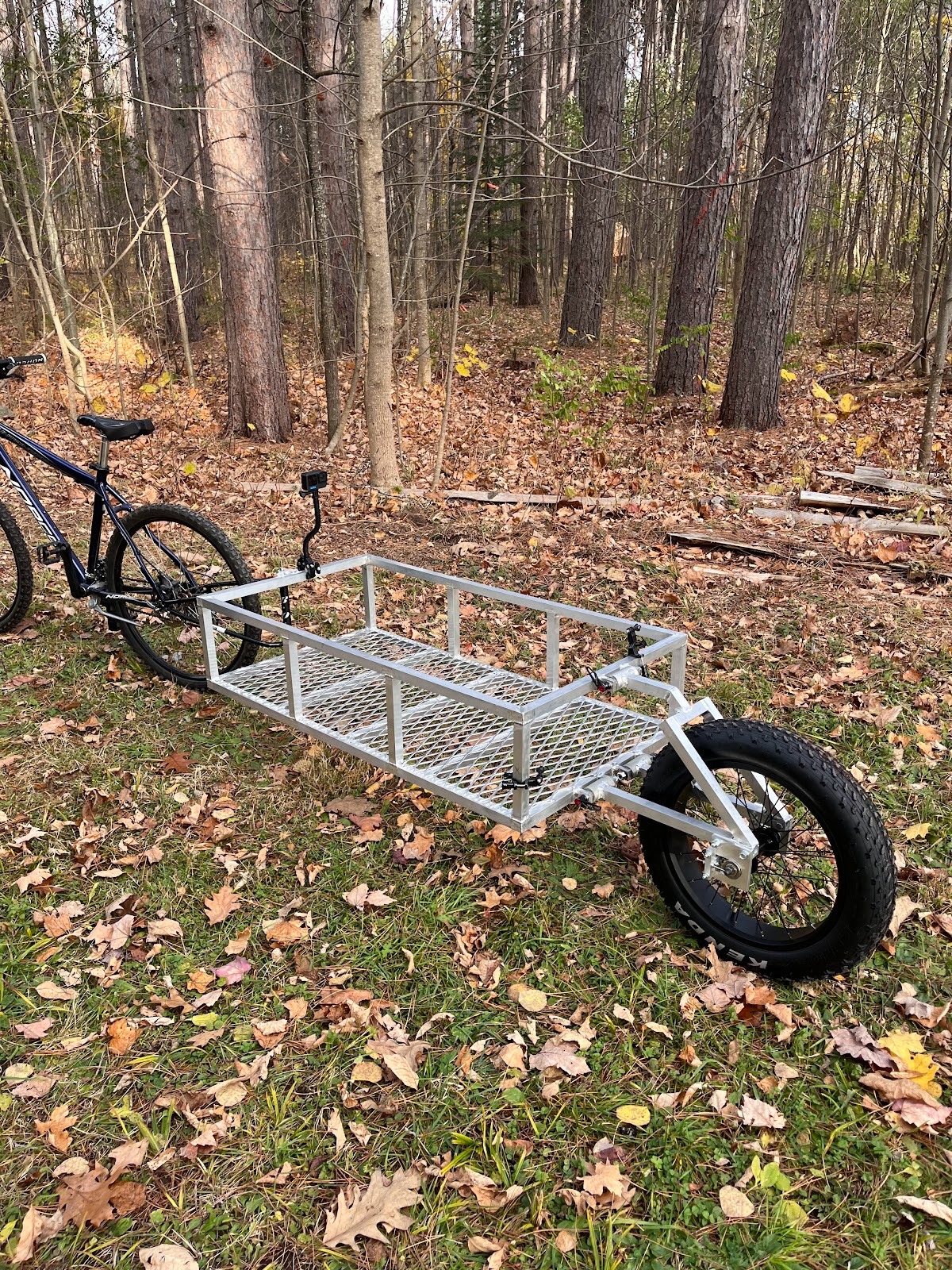
Figure 2: Trailblazer Prototype 2

Figure 3: Trailblazer Brake Slider System

Figure 4: Trailblazer Rear Triangle with Brake Attached